Topic outline

  • We welcome you to the course on Old Products - New Components!

  • Lesson 1: Introduction and Overview: The main components of food products. Macro and Micronutrients. Phytonutrients, minerals and vitamins. Their impact on health


    Welcome dear students!

    Nutrients are the compounds in food that provide us with energy that facilitates repair and growth and helps you carry out different life processes. 

    Not all nutrients provide energy but are necessary for some form or the other. These nutrients are divided into two categories:

    • Macronutrients, which are required by the body in large amounts.
    • Micronutrients, which are required by the body in small amounts.


    This lesson provides you basics of food components and their role in maintaining good health. Clarifies differences between macronutrients anf micronutrients. 


    After completing this lesson you will be able to

    - know about the main food product components

    - able to analyze daily requirements

    - able to consult a person to improve diet plan


    7 hours are allocated to attend this lesson, to familiarize with the content and complete assignments, 4 of which are allocated for self-preparation


  • Lesson 2: Unfavorable environmental factors and nutrigenomics. Chemical fertilizers, herbicides, pesticides.chemical fertilizers


    Dear Students! Welcome the Lesson 2 Unfavorable environmental factors and nutrigenomics. Chemical fertilizers, herbicides, pesticides.chemical fertilizers


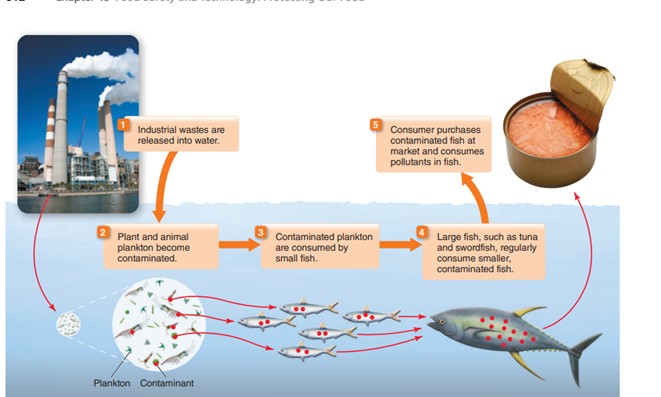
    Food residues are chemicals that remain in foods despite cleaning and processing. Residues of global concern include persistent organic pollutants, pesticides, and the hormones and antibiotics used in animals. The health concerns related to residues include nerve damage, disorders of the reproductive system, cancer, and the development of antibiotic-resistant pathogenic bacteria.

    Foodborne persistent organic pollutants (POPs) of greatest concern include the heavy metals mercury and lead, plasticizers, dioxins, and PFASs.
     Pesticides are used to prevent or reduce food crop losses; however, they too can persist in the environment. POPs and some pesticides can act as neurotoxins, carcinogens, or endocrine disruptors; therefore, it is essential to take action to reduce your exposure.
    The use of recombinant bovine growth hormone (rBGH) has been associated with harm to dairy cows and a possible risk for cancer in humans; however, the research on rBGH is currently inconclusive. The use of—and residues from—antibiotics in animals raised for food increases the U.S. population’s risk for antibiotic-resistant infections.
    Nutrigenomics studies the interactions among genes, the environment, and nutrition. Until the late 20th century, scientists believed that the genes a person is born with determined his or her traits rigidly, but we now know that genetic expression is influenced—perhaps significantly— by chemicals present in the foods we most commonly eat and the substances in our environment to which our cells are commonly exposed. These include chemicals present in tobacco, drugs, alcohol, and environmental toxins. This helps explain why the appearance and health of identical twins—who have the same DNA—commonly change as the twins age. Specific nutrient– gene interactions, including how nutrients might influence cellular communication, use and storage of energy, and other processes, nutrigenomics may help people reduce their risk of developing diet-related diseases and possibly even treat existing conditions through diet alone

    Learning objectivies:

    After this lesson you will be able to 
    - Describe the process by which persistent organic pollutants accumulate in foods
    - Discuss the potential health concerns associated with residues from heavy metals, plasticizers, dioxins, PFASs, pesticides, growth hormones, and antibiotics
    - Identify the key characteristics of organic foods, and compare their nutrient and residue levels with those of foods conventionally grown

    7 hours are allocated to attend this lesson, to familiarize with the content and complete assignments, 4 of which are allocated for self-preparation
  • Lesson 3: Basic food products: what has changed in their composition? Aquaponics.

    Awesome Hydroponic Farming Modern Technology | Aquaponics agriculture -  Vertical Farming - YouTube


    Using alternative agricultural methods to produce food for family consumption or generate income has gained interest due to recent food safety concerns with commercially cultivated produce, the smaller footprint required, and the ease of regulating production factors. One increasingly popular alternative method is aquaponic production, which allows for fresh vegetable produce and healthy fish protein. This publication covers the different components of an aquaponics system, their purpose, and the mechanisms that connect the system and allow for proper operation. The information presented below will offer insight into the various components of an aquaponics system and the functionality and significance of each component for the efficient operation of a system.

    The learning outcomes

    - to provide you general information about the aquaponics

    - to introduce scientific viewpoints


    This lesson explores main content on aquaponics. Nutritional value of aquaponic products and differences between them and other products according to scientific viewpoint. 

    7 hours are allocated to attend this lesson, to familiarize with the content and complete assignments by reading a scientific paper, 4 of which are allocated for self-preparation


  • Lesson 4: How does the composition of food change if stored in plastics?

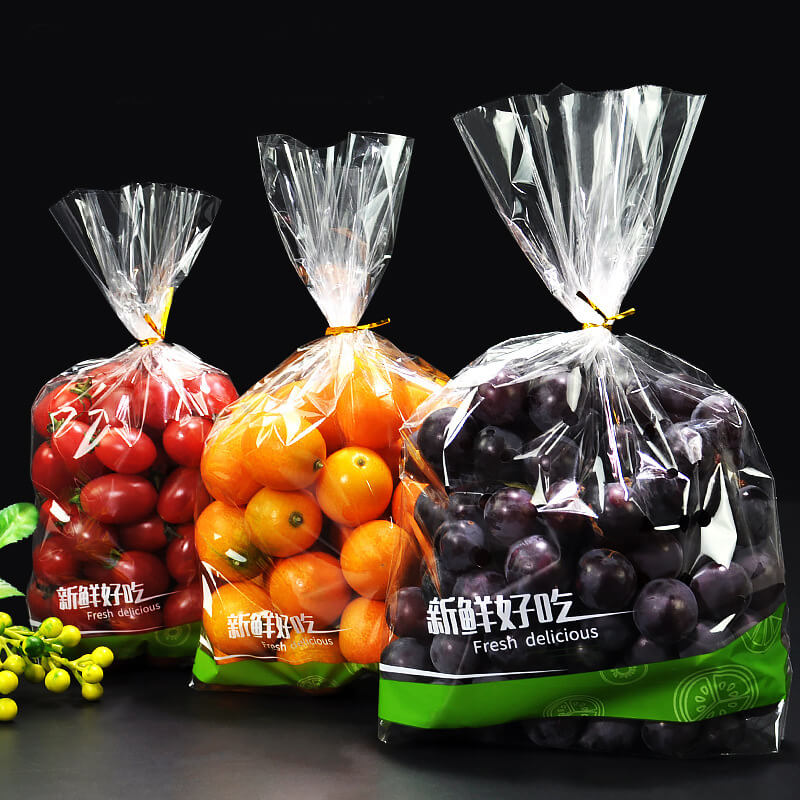
    China Transparent Anti Fog Packaging Pouch Fruit Shop Supermarket Vegetable  And Fruit Storage Breathable Plastic Bags Manufacturer and Supplier | OK  Packaging


    Welcome to the Lesson 4 

    Various types of food-packaging materials are utilized, with plastic being the most versatile. However, there are certain concerns with regards to the usage of plastic packaging because of unreacted monomers’ potential migration from the polymer packaging to the food. The magnitude of monomer migration depends on numerous aspects, including the monomer chemistry, type of plastic packaging, physical–chemical parameters such as the temperature and pH, and food chemistry.

    This lesson explores Plastic Food-Packaging and it's impact on Human Health. 


    Learning outcomes


    After completing this lesson you will be able to 

    - know classification of plastic food pockets and bags

    - factors leading to the magnitude of monomer migration into the food

    - identify the most dangerious types of plastic bags, pockets

    - explain negetive consequences of plastic pockets and bags on human health


    7 hours are allocated to attend the lesson 4, to review scientific paper on this topic  and complete assignments, 3 of which are allocated for self-preparation.


  • Final Exam