Topic outline
GENERAL
We welcome you to the course "Human Nutrition"
Our body requires the ingestion and utilisation of food components to fulfil its basic functions. This is referred to as nutrition. Humans obtain most of their nutrients from their daily eating habits. According to age and physical conditions, the needed nutrients vary.
Course duration- 1 ECTS (25 hours)
Goals of the course: students will proceed to evaluate the general concept of nutrition and explore the relevance and the roles of the essential nutrients and their components. The module will continue with a specific part dedicated to the macro- and micro-nutrients, and hydration, presenting the sources and their benefits.
Then, the course will be focusing on the concepts of energy balance, and on the elements and fundamental methods for determining if a person’s diet contains enough nutrients to promote health. The major topics will be presented considering each essential nutrient and recommended daily food intake.
After completion of the course, students will be able to:
- describe nutritional principles with regard to the major nutrient classes and their effects on human physiology;
- recall the nutritional value of many of the different foods available;
- describe the effects of various processing and preparation techniques on nutritional value;
- analyze current, and often controversial, nutrition needs, issues and research trends;
- assess their own eating habits and critically assess their own nutrient requirements;
- explain how nutrition supports physical activity and performance.
Lesson 1: Introduction to Nutrition

Healthy food choices are crucial for a healthy lifestyle. However, food choices are complex and affected by various factors. Understanding the determinant factors affecting food choices could aid policy-makers in designing better strategies to promote healthy food choices in the general public. This study aims to evaluate the food choice motivations and to segment consumer groups, according to their food choice motivations, in a sample of 531 Italian consumers (collected by convenience sampling), through offline and online survey platforms. K-means cluster analysis was applied to identify consumer groups using six food choice motivation categories (health, emotional, economic and availability, social and cultural, environmental and political, and marketing and commercial). The results suggest that the strongest determinants for the food choices of Italian consumers are Environmental factors and Health. Two consumer profiles were identified through the segmentation analysis: Emotional eating and Health-driven consumers. The respondents were found to have a good awareness of what comprises a healthy diet. There is a potential market for healthy and sustainable food products, especially products with minimal or environmentally friendly packages. Food labels and information strategies could be promoted as tools to assist consumers to make healthy food choices.
Goal of the lesson: provide students with knowledge of the basic principles of human nutrition with respect to essential food intake. The effect of the nutritional value of foods on human physiology will be covered. An assessment of personal nutritional needs and those of various populations will be investigated
After completion this lesson students will be able:
- to understand digestion and absorption of food and how the nutrients and non nutrients have roles in the body and can affect one’s health
- for appreciation of diet planning, dietary guidelines, and nutrition labeling and how these are important to health
- to have a broad knowledge base of the Influences and factors affecting bodyweight
Dear students, please read and analyze the following Articles:- Article 1 about Healthy food choices (30 mins)
- Article 2 about Healthy food choices are hapy food choices (30 mins)
Dear Students!
The Purpose of this activity is to understand and analyze the main roles of nutrition and food choices for a healthy life
Task: Please read the Articles given above and1) write 2 questions about what you would like to know additionally, and,
2) write 2 comments on any 2 questions of other students in accordance with well-known concepts.
Respond: please read the posts of your fellow students and add something missing or ask a question or discuss their input.
Deadline: Participate until xx
Grading: Pass (if you submitted 2 questions and gave 2 comments on any 2 questions from other students) or fail (if you were not active and did not complete the task completely).
Lesson 2: Body composition
Learning Goal: Understand the basic concepts in nutrition and body composition. Learn about human nutrition and about the main functions of the digestive system
Objectives:
• To understand, study, research, and practice nutrition, a holistic integrated approach from molecular to societal level
• The study of the structure, chemical and physical characteristics, and physiological and biochemical effects of nutrients found in foods underpins the understanding of nutrition.
• Describe basic concepts in nutrition, factors that affect human nutritional needs ,the importance of research and scientific methods to understanding nutrition
• Describe the process of calculating Body Mass Index (BMI)
• Interpretation and application of data from body composition measurements should be carried out with care and should take
into account the limitations of the method used, age, gender, and ethnic group.
Please watch these 5 videos:
What BMI does not tell you about health (5min)
Bod Pod (2:30 min)
Pea Pod (2:50 min)
BIA measurement (2:55 min)
Caliper measurement (15 min)Work through and understand the content of the powerpoint file.
Task 2
4 units (= 90 min)
Deadline: xx
Dear student!
Please read these two articles and do some research on other techniques to measure body composition.
Write an essay on the different techniques.
To learn the development of ethical norms, standards, and values in nutrition research and practice
https://www.hairscientists.org/wp-content/uploads/2013/06/1405168072%2BNutritionA.pdf
To learn several direct, indirect, and doubly indirect techniques which are available
to measure body composition, with its own distinct advantages and disadvantages.
https://www.hairscientists.org/wp-content/uploads/2013/06/1405168072%2BNutritionA.pdf
Lesson 3: The essential Nutrients and their importance.
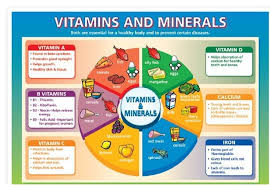
The six classes of nutrients found in foods are carbohydrates, lipids (mostly fats and oils), proteins, vitamins, minerals, and water. Carbohydrates, lipids, and proteins constitute the bulk of the diet, amounting together to about 500 grams (just over one pound) per day in actual weight. These macronutrients provide raw materials for tissue building and maintenance as well as fuel to run the myriad of physiological and metabolic activities that sustain life. In contrast are the micronutrients, which are not themselves energy sources but facilitate metabolic processes throughout the body: vitamins, of which humans need about 300 milligrams per day in the diet, and minerals, of which about 20 grams per day are needed. The last nutrient category is water, which provides the medium in which all the body’s metabolic processes occur.
A nutrient is considered “essential” if it must be taken in from outside the body—in most cases, from food. (See table.) These nutrients are discussed in this section. Although they are separated into categories for purposes of discussion, one should keep in mind that nutrients work in collaboration with each other in the body, not as isolated entities.
Goal of the lesson: to familiarise students with the classification, chemical composition and biological role of proteins, fats, carbohydrates, minerals and vitamins in human nutrition and with the nutritional and biological value of plant and animal products.
After completion of the course, students will be able to:
- Analyze the role of each vitamin and mineral in human nutrition
- Define Sources of each vitamin and mineral in food
- Consequences of deficiencies and toxicities
- Assess Nutritional value of foods
- Know Nutrition needs, issues and research trends
Dear students, please read and analyze the following Articles:Dear students,
answer the questions below regarding the lessons and submit your answers in this assignment:1. Describe nutritional theories. Theory of rational, adequate nutrition Alternative theories of nutrition.
2. What is the essential of Macronutrients: proteins, fats, carbohydrates for our life?
3. Describe methods of studying actual nutrition.
4. Methods of assessment of nutritional status.
5. Compilation of diets for healthy individuals, taking into account age, occupation.
6.Characteristics of physiological norms of nutrition.
7. Energy expenditure and energy value of food
8. Factors that determine the human body's need for nutrients and energy.
9. Hypo- and avitaminosis. The main causes of vitamin deficiency. Measures of prevention of hypo- and avitaminosis.
10. Classification of mineral elements. The role of mineral elements in the vital activity of the organism.
Grading: 0-49 points - unsatisfactory, 50-69 points - satisfactory, 70-89 - good, 90-100 - excellent.
Deadline: xx- To pass the test you need to answer all questions correctly! You can repeat the test as often as you like!
Lesson 4: Human nutrition and metabolism
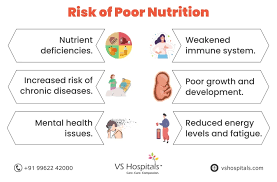
Goal of the lesson: provides a detailed examination of the nutrients required by humans throughout the life cycle, their sources in food and in the Irish diet, with a critical assessment of recommended dietary allowances (RDAs). It also includes biochemical aspects of nutrition, together with nutrient requirements, growth and development at key stages of the life cycle.
After complition this class students will be able:
- Understand the nature and contribution of diet and nutrition to maintenance of essential metabolic processes.
- Understand the changing nutritional requirements through periods of growth, development and activity.
- Explain the physiological and biochemical processes associated with digestion and metabolism of food.
- Examine the protective roles of antioxidant and anti-inflammatory dietary components in health and chronic disease.
How does metabolism work?
After we eat food, the digestive system uses enzymes to:
- break proteins down into amino acids
- turn fats into fatty acids
- turn carbohydrates into simple sugars (for example, glucose)
The body can use sugar, amino acids, and fatty acids as energy sources when needed. These compounds are absorbed into the blood, which carries them to the cells.
After they enter the cells, other enzymes act to speed up or regulate the chemical reactions involved with "metabolizing" these compounds. During these processes, the energy from these compounds can be released for use by the body or stored in body tissues, especially the liver, muscles, and body fat.
Metabolism is a balancing act involving two kinds of activities that go on at the same time:
- building up body tissues and energy stores (called anabolism)
- breaking down body tissues and energy stores to get more fuel for body functions (called catabolism)
Anabolism (pronounced: uh-NAB-uh-liz-um), or constructive metabolism, is all about building and storing. It supports the growth of new cells, the maintenance of body tissues, and the storage of energy for future use. In anabolism, small molecules change into larger, more complex molecules of carbohydrates, protein, and fat.
Catabolism (pronounced: kuh-TAB-uh-liz-um), or destructive metabolism, is the process that produces the energy needed for all activity in the cells. Cells break down large molecules (mostly carbs and fats) to release energy. This provides fuel for anabolism, heats the body, and enables the muscles to contract and the body to move.
As complex chemical units break down into more simple substances, the body releases the waste products through the skin, kidneys, lungs, and intestines.
What controls metabolism?
Several hormones of the endocrine system help control the rate and direction of metabolism. Thyroxine, a hormone made and released by the thyroid gland, plays a key role in determining how fast or slow the chemical reactions of metabolism go in a person's body.
Another gland, the pancreas, secretes hormones that help determine whether the body's main metabolic activity at any one time are anabolic (pronounced: an-uh-BOL-ik) or catabolic (pronounced: kat-uh-BOL-ik). For example, more anabolic activity usually happens after you eat a meal. That's because eating increases the blood's level of glucose — the body's most important fuel. The pancreas senses this increased glucose level and releases the hormone insulin, which signals cells to increase their anabolic activities.
Metabolism is a complicated chemical process. So it's not surprising that many people think of it in its simplest sense: as something that influences how easily our bodies gain or lose weight. That's where calories come in. A calorie is a unit that measures how much energy a particular food provides to the body. A chocolate bar has more calories than an apple, so it provides the body with more energy — and sometimes that can be too much of a good thing. Just as a car stores gas in the gas tank until it is needed to fuel the engine, the body stores calories — primarily as fat. If you overfill a car's gas tank, it spills over onto the pavement. Likewise, if a person eats too many calories, they "spill over" in the form of excess body fat.
The number of calories someone burns in a day is affected by how much that person exercises, the amount of fat and muscle in his or her body, and the person's basal metabolic rate (BMR). BMR is a measure of the rate at which a person's body "burns" energy, in the form of calories, while at rest.
The BMR can play a role in a person's tendency to gain weight. For example, someone with a low BMR (who therefore burns fewer calories while at rest or sleeping) will tend to gain more pounds of body fat over time than a similar-sized person with an average BMR who eats the same amount of food and gets the same amount of exercise.
BMR can be affected by a person's genes and by some health problems. It's also influenced by body composition — people with more muscle and less fat generally have higher BMRs. But people can change their BMR in certain ways. For example, a person who exercises more not only burns more calories, but becomes more physically fit, which increases his or her BMR.
To pass the test you need to answer all questions correctly! You can repeat the test as often as you like!
Lesson 5: Dietary imbalanced and diet related diseases
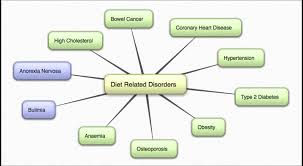
Goal of the lesson: To foster food and nutritional security to guide and promote healthy lifestyles and healthy eating practices that contribute to preventing malnutrition and the development of diseases associated with food.
After completion of the course, students will be able to:
- demonstrates knowledge of nutritionally balanced diets.
- research the long-term effects of food choices;
- recognize strategies for prevention, treatment, and management of diet-related diseases such as diabetes, hypertension, childhood obesity, anorexia, and bulimia;
Nutritional disease
any of the nutrient-related diseases and conditions that cause illness in humans. They may include deficiencies or excesses in the diet, obesity and eating disorders, and chronic diseases such as cardiovascular disease, hypertension, cancer, and diabetes mellitus. Nutritional diseases also include developmental abnormalities that can be prevented by diet, hereditary metabolic disorders that respond to dietary treatment, the interaction of foods and nutrients with drugs, food allergies and intolerances, and potential hazards in the food supply. All of these categories are described in this article. For a discussion of essential nutrients, dietary recommendations, and human nutritional needs and concerns throughout the life cycle, see nutrition, human.
Nutrient deficiencies
Although the so-called diseases of civilization—for example, heart disease, stroke, cancer, and diabetes—will be the focus of this article, the most significant nutrition-related disease is chronic undernutrition, which plagues more than 925 million people worldwide. Undernutrition is a condition in which there is insufficient food to meet energy needs; its main characteristics include weight loss, failure to thrive, and wasting of body fat and muscle. Low birth weight in infants, inadequate growth and development in children, diminished mental function, and increased susceptibility to disease are among the many consequences of chronic persistent hunger, which affects those living in poverty in both industrialized and developing countries. The largest number of chronically hungry people live in Asia, but the severity of hunger is greatest in sub-Saharan Africa. At the start of the 21st century, approximately 20,000 people, the majority of them children, died each day from undernutrition and related diseases that could have been prevented. The deaths of many of these children stem from the poor nutritional status of their mothers as well as the lack of opportunity imposed by poverty.
Only a small percentage of hunger deaths is caused by starvation due to catastrophic food shortages. During the 1990s, for example, worldwide famine (epidemic failure of the food supply) more often resulted from complex social and political issues and the ravages of war than from natural disasters such as droughts and floods.
Malnutrition is the impaired function that results from a prolonged deficiency—or excess—of total energy or specific nutrients such as protein, essential fatty acids, vitamins, or minerals. This condition can result from fasting and anorexia nervosa; persistent vomiting (as in bulimia nervosa) or inability to swallow; impaired digestion and intestinal malabsorption; or chronic illnesses that result in loss of appetite (e.g., cancer, AIDS). Malnutrition can also result from limited food availability, unwise food choices, or overzealous use of dietary supplements.
Dear Students,
1) write down (in a short form) everything you already know about specific illnesses such as Type 2 diabetes, osteoporosis, anorexia nervosa, bulimia nervosa, and so forth. This is a brainstorming exercise to help you revise and activate your knowledge!
2) Then, write about what you want and need to learn about diet-related illnesses. This will help you manage your learning and fill in the gaps.
Grading: Pass or FailDeadline: xx
Think about the long-term effects of food choices. Write an essay in which you state your position on the long-term effects of food choices.
Grading: Pass or Failed
Deadline: xx